Game Review
StarRupture Early Access Review: Factory Brain Meets Alien Panic
StarRupture mixes first-person factory building, survival pressure, co-op chaos, and alien base defense into a promising Early Access package that still needs serious polish.
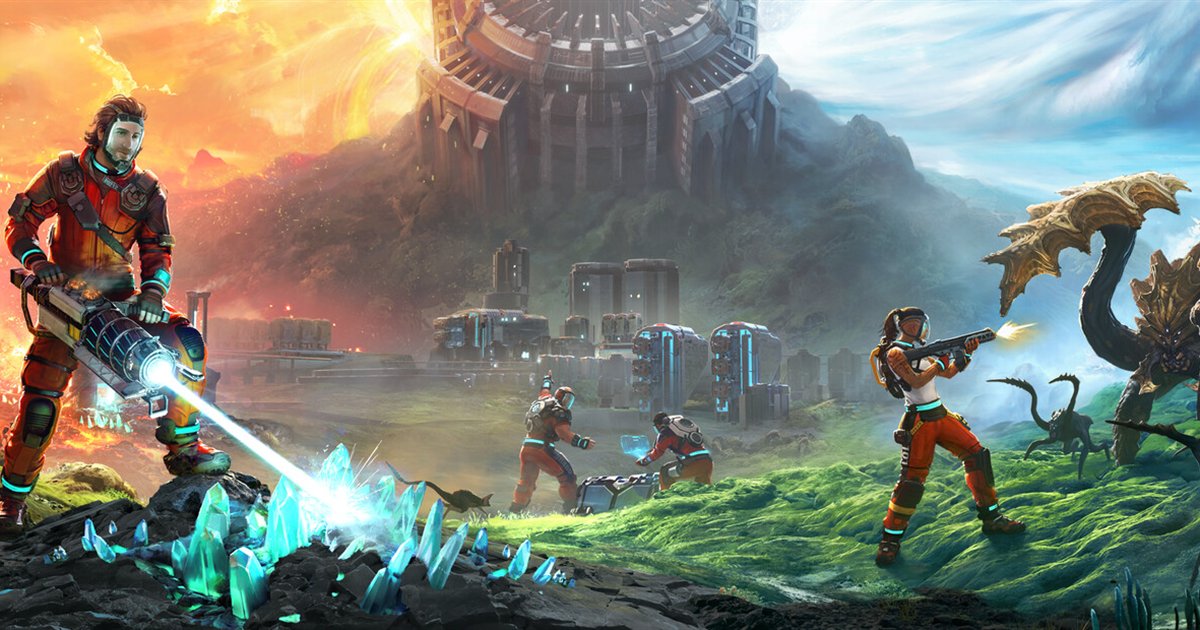
StarRupture is exactly the kind of game that makes a Discord server start negotiating schedules. It has factories, hostile alien wildlife, co-op, resource routes, base attacks, and the beautiful disaster of players trying to explain production flow while something outside is making murder noises.
It is also very much an Early Access game.
That distinction matters. StarRupture launched on Steam Early Access on January 6, 2026, and Creepy Jar is still expanding the map, systems, combat, stability, and quality-of-life layer. The current Steam picture is positive overall, with Very Positive user reviews in English and all languages, but the recent review trend is softer. That matches the shape of the game: strong idea, good first impression, real community interest, and a pile of rough edges that start to matter more as factories get bigger.
So this is not a final verdict on a 1.0 release. It is a review of the game players can buy and squad up for right now.
What is StarRupture?
StarRupture is a first-person open-world base-building and survival game from Creepy Jar, the studio behind Green Hell. You are dropped onto Arcadia-7, a violent alien planet where recurring cataclysms, hostile creatures, temperature hazards, and corporate extraction work all collide.
The core loop is familiar if you have spent time with Satisfactory, Factorio, The Planet Crafter, or survival crafting games: gather resources, unlock production, build machines, connect logistics, expand the base, research upgrades, and push into more dangerous areas. The twist is that StarRupture wants more combat and environmental threat than a pure factory game. You are not just optimizing a spreadsheet with pretty belts. You are trying to keep the operation alive while the planet keeps reminding you it hates the business model.
The official Steam listing currently describes single-player and online co-op support, with up to four players building, fighting, and exploring together. At the time of writing, Steam lists the base price at $19.99, with a temporary $15.99 sale running through July 24, 2026. The game is available on Windows PC through Steam.
How we score this review
Before we lock in the verdict, here's how we evaluate every game that crosses our radar:
- Gameplay Mechanics (1.0 point) - How does it feel to play?
- Graphics & Visual Design (1.0 point) - Does it look good?
- Audio & Sound Design (1.0 point) - How's the audio experience?
- Story & Narrative (1.0 point) - Is there a compelling story?
- Replayability (1.0 point) - Will you keep coming back?
- Multiplayer/Social (1.0 point) - How's the online experience?
- Performance & Optimization (1.0 point) - Does it run well?
- Innovation & Originality (1.0 point) - Does it bring something new?
- Value for Money (1.0 point) - Is it worth the price?
- Overall Fun Factor (1.0 point) - Bottom line: is it fun?
Now let's see how the current Early Access build holds up.
1. Gameplay Mechanics: 0.80/1.00
StarRupture's best pitch is simple: what if factory building had more teeth?
The production side gives players the usual satisfaction of turning a messy campsite into a working industrial system. Mines, machines, rails, storage, research, power, and distributed bases create that familiar factory-builder brain itch where every problem becomes a routing problem. The game also pushes players out of base more than some factory games do. Blueprints, resources, points of interest, and combat encounters make exploration part of progression instead of optional sightseeing.
What Works:
- Factory planning has enough complexity to hook automation fans
- Exploration feeds the tech loop instead of sitting outside it
- Base defense gives production real stakes
- Rupture events make the planet feel unstable and hostile
- Co-op naturally splits labor between builders, scouts, fighters, and resource runners
Current Friction:
- Progression can feel poorly explained
- Inventory and container management need more quality-of-life work
- Combat has energy, but enemy variety and weapon depth are still limited
- Factory planning gets clumsy once the operation spreads out
- Some players report that late progression becomes more chore than challenge
The community consensus is not hard to read. Players like the concept and often compare it favorably to Satisfactory with more combat, but the negative feedback keeps circling the same problems: rough UI, slow chores, confusing progression, uneven pacing, and systems that do not always support big factory builds as cleanly as they should.
That leaves StarRupture in a good but unfinished place. The core loop works. The game just needs fewer little fights against menus, terrain, inventory, and unclear objectives.
Score: 0.80/1.00 - Strong core systems with Early Access friction holding the flow back.
2. Graphics & Visual Design: 0.88/1.00
StarRupture looks expensive in the ways that matter for this kind of game. Arcadia-7 has big skybox energy, sharp color contrast, alien plant life, industrial machinery, fire, storms, and enough visual density to make exploration feel worth doing.
Visual Highlights:
- Strong contrast between industrial structures and alien wilderness
- Machinery has enough detail to make factory growth feel satisfying
- Rupture events give the planet a memorable visual identity
- Enemy silhouettes are readable in most encounters
- The world sells the fantasy of a hostile extraction planet
The official art and screenshots lean hard into the split personality: cold corporate machinery on one side, violent alien nature on the other. That is the whole game in one frame. When StarRupture is working visually, it gives the player a reason to build one more outpost just to see what the next ridge looks like.
It does still carry Early Access roughness. Some environments can blur together, and repeated alien threats need more variety if the world is going to stay interesting for long campaigns. But the foundation is strong. This is not a game fighting uphill against bad art direction.
Score: 0.88/1.00 - Strong sci-fi presentation with room for more biome and enemy variety.
3. Audio & Sound Design: 0.76/1.00
The audio does its job, but it is not the category carrying the game.
Factory games live and die partly by feedback. Machines need to sound active. Hazards need to announce themselves. Enemy pressure needs to cut through the noise without becoming exhausting. StarRupture appears to land the essentials: machinery, weapons, alien threats, environmental danger, and event cues all support the loop.
Audio Strengths:
- Industrial feedback supports the factory fantasy
- Combat audio gives firefights enough weight
- Environmental effects help sell the unstable planet
- Co-op voice chat naturally turns danger into better moments
Where It Needs More:
- More creature variety should come with stronger audio identity
- Longer sessions need more musical and ambient range
- Production feedback could be clearer for troubleshooting big bases
- Repeated attacks and hazard cycles risk becoming background noise
The audio is functional and sometimes atmospheric, but it does not yet have the same identity as the visual direction. That is not fatal for a factory survival game, but it does cap the score.
Score: 0.76/1.00 - Solid support work, not yet a standout part of the experience.
4. Story & Narrative: 0.58/1.00
StarRupture has a premise, but not a story strong enough to carry the game on its own.
The setup is useful: prisoners, corporate extraction, a hostile alien planet, and a job that turns survival into production. That gives the player's work enough context. You are not just building for the sake of building. You are feeding a corporate machine that treats the planet and the worker as disposable.
Narrative Notes:
- The convict labor setup fits the extraction gameplay
- Corporate framing gives the game a clean tone
- Exploration can support environmental storytelling
- Current player feedback suggests progression and narrative direction need clearer presentation
The problem is that the story is not the reason people are talking about StarRupture. The hook is the factory survival blend. The narrative mostly functions as a frame around that loop.
That is acceptable for Early Access, but it matters for scoring. If Creepy Jar wants StarRupture to become more than a strong systems sandbox, the story layer needs better pacing, stronger discoveries, and more memorable consequences for pushing deeper into Arcadia-7.
Score: 0.58/1.00 - Good premise, thin delivery in the current build.
5. Replayability: 0.82/1.00
Replayability is one of StarRupture's better categories because factory games naturally create long tails. If the production puzzle works, players can lose whole evenings to fixing one bottleneck nobody else can see.
Replay Factors:
- Different base layouts create different problems
- Co-op groups naturally divide work in different ways
- Distributed production gives room for planning and experimentation
- Update 1 added more areas, buildings, resources, wildlife, recipes, and progression hooks
- Future Early Access updates should expand the ceiling
The replay value depends heavily on your tolerance for unfinished systems. Players who enjoy living inside an Early Access roadmap will find a lot to chew on. Players who want a clean start-to-finish campaign should wait.
The biggest replay risk is friction. If the late game becomes too much running, reworking, menu digging, and bug dodging, the desire to rebuild smarter can turn into a desire to uninstall until the next patch. That is where quality-of-life updates will decide the game's long-term health.
Score: 0.82/1.00 - Strong replay potential, but polish will determine whether it lasts.
6. Multiplayer/Social: 0.84/1.00
This is the PUG Empire category that matters most. StarRupture is built for exactly the kind of group that likes arguing in voice chat about whether the factory needs more power, more ammo, or less leadership.
Social Strengths:
- Four-player online co-op fits the game's scale
- Factory roles emerge naturally without class restrictions
- Exploration and base defense create immediate squad calls
- One player can build while another scouts, fights, hauls, or causes problems
- Dedicated server support and hotfix attention show the co-op layer is a real priority
The game has strong Discord-night energy. Someone is optimizing rails. Someone is lost. Someone is asking where the tungsten went. Someone is absolutely about to upgrade the base core before the squad is ready. That is useful chaos.
But the current technical condition matters. Recent player feedback still includes complaints about co-op lag, host-client problems, stuttering, and dedicated server issues. Creepy Jar has been shipping hotfixes aimed at stability, crashes, co-op sync, dedicated servers, and multiplayer bugs, which is a good sign, but it also confirms that the social experience is still being stabilized.
When it works, StarRupture looks like a strong community game. When it does not, it becomes the kind of night where everyone spends more time troubleshooting than building.
Score: 0.84/1.00 - Excellent co-op concept with technical caveats still attached.
7. Performance & Optimization: 0.68/1.00
This is where the review stops being gentle.
StarRupture is ambitious, visually dense, and simulation-heavy. It also has enough current community complaints about lag, crashes, stutters, dedicated server trouble, and big-base behavior that performance cannot be treated as a minor footnote.
Technical Positives:
- Many players report smooth sessions on capable hardware
- Recent hotfixes have targeted crashes and stability
- The developers are actively responding to Early Access feedback
- Minimum and recommended specs are clearly listed on Steam
Technical Concerns:
- Co-op clients can have a rougher time than hosts
- Large or complex bases appear to expose more problems
- Dedicated server stability has needed repeated attention
- Some bugs interrupt building, progression, and combat flow
- Recent review sentiment is weaker than overall sentiment
The important thing is that this does not look abandoned. The patch history shows active work. Hotfixes in June targeted stability, crashes, multiplayer behavior, and dedicated server problems. That matters.
Still, a review scores the current game, not the hoped-for version. Right now, StarRupture is playable enough for many players and annoying enough for others. For a co-op factory game, inconsistency is expensive.
Score: 0.68/1.00 - Playable and improving, but stability is still one of the biggest risks.
8. Innovation & Originality: 0.79/1.00
StarRupture is not inventing factory games, survival crafting, or co-op base defense. It is combining them in a way that has obvious appeal.
Fresh Elements:
- Factory automation with stronger direct combat pressure
- Rupture events give the planet an active threat cycle
- Exploration is tied to tech and blueprint progression
- Distributed bases make logistics feel more expedition-based
- The hostile corporate sci-fi frame fits the systems well
The common comparison is Satisfactory, and that comparison is fair. StarRupture knows it is playing near that lane. The difference is that Creepy Jar is trying to make the world fight back harder and force more field work between build sessions.
That is a good angle. It gives StarRupture a reason to exist beyond "Satisfactory but different color." It just needs to sharpen the combat, progression, and late-game incentives so the blend feels fully intentional instead of occasionally overstuffed.
Score: 0.79/1.00 - Familiar parts, smart combination, not fully refined yet.
9. Value for Money: 0.86/1.00
At $19.99 base price, StarRupture is priced aggressively for the amount of game it is trying to become. During the current Steam promotion, it is even easier to justify for survival and factory fans.
Value Strengths:
- Co-op gives the purchase immediate group utility
- Factory games can produce strong hour-to-dollar value
- Early Access updates are already adding meaningful content
- The price is lower than many comparable survival crafting launches
- The concept is strong enough to be worth tracking even if you wait
Value Caveats:
- Buyers must accept Early Access instability
- Players who hate QoL friction should wait for patches
- Story-focused players will not get the same value
- Groups with mixed hardware may hit uneven performance
This is one of the easier categories to score positively. Even with rough edges, StarRupture has a strong value pitch for the right audience. The warning is not "this is overpriced." The warning is "know what Early Access means here."
Score: 0.86/1.00 - Strong price-to-potential ratio, especially for co-op factory fans.
10. Overall Fun Factor: 0.80/1.00
The fun is real. So is the friction.
StarRupture works because it gives players several kinds of problems at once. The factory needs planning. The base needs defense. The map needs scouting. The squad needs coordination. The planet needs to calm down and will not. That is a good recipe for memorable community nights.
Fun Highlights:
- Building a working production chain still hits the brain correctly
- Co-op makes even basic logistics more entertaining
- Rupture events and alien attacks add pressure
- Exploration breaks up factory tunnel vision
- The game has a clear "one more fix before bed" pull
Fun Killers:
- Confusing progression can stall momentum
- Inventory and building friction add up
- Technical issues can derail co-op sessions
- Repetition shows through once the novelty fades
- Some systems feel like they need one more design pass
The best version of StarRupture is easy to imagine, and that is both exciting and dangerous. It can make you more forgiving than the current build deserves. The honest read is that the game is already fun for the right group, but not polished enough to recommend blindly to everyone.
Score: 0.80/1.00 - Strong squad fun when the systems behave, uneven when the rough edges stack.
Final Verdict: 7.81/10.00
StarRupture is a promising Early Access factory survival game with a strong co-op hook, excellent visual identity, fair pricing, and enough community momentum to deserve attention. It is also unfinished in ways that matter: progression clarity, QoL, late-game flow, multiplayer stability, and technical consistency all need work.
Pros:
- Strong factory survival concept
- Great fit for co-op Discord sessions
- Attractive alien sci-fi world
- Rupture events give the planet personality
- Good value at the current price
- Active patching and content updates
Cons:
- Still rough around the edges
- Co-op and dedicated server stability need more polish
- Progression can feel unclear
- Inventory and building QoL lag behind genre expectations
- Story layer is thin
- Late-game pacing may frustrate some players
Recommendation: If your squad likes Satisfactory, survival crafting, base defense, and Early Access tinkering, StarRupture is worth a serious look. If you want a polished 1.0 factory game with clean UX and stable co-op, wait for more updates.
The foundation is there. Now Creepy Jar has to make the factory stop fighting the player as much as the aliens do.
Have you played StarRupture? Drop your thoughts in our Discord and tell the squad where you agree, where we're dead wrong, and what we should review next.
Final Score: 7.81/10.00 - A strong co-op factory survival pitch with real momentum, real fun, and very real Early Access bruises.
Behind this article
Sources & editorial notes
This is a research-based editorial review. It draws on published information and the sources below, and does not claim a completed hands-on playthrough.
Editorial standards & correctionsShare this article

Written by
ApexInterfectum
Co-Founder, PUG Empire | Army Veteran | Full Stack Developer
ApexInterfectum is an Army veteran and co-founder of PUG Empire, a competitive gaming community built on coordinated team play and continuous improvement. He brings a full-stack development background to community tooling and content infrastructure, and serves as technical subject matter expert across the Dirty Rice platform. His writing covers the systems and strategies behind sustainable content creation, competitive growth, and modern streaming workflows.