Game Review
Ashes of the Singularity II Review: Big Armies, Short Campaign
Ashes of the Singularity II makes commanding huge armies appealing, but a short campaign, awkward controls, and launch issues narrow its audience. Our verdict: 7.14/10.00.
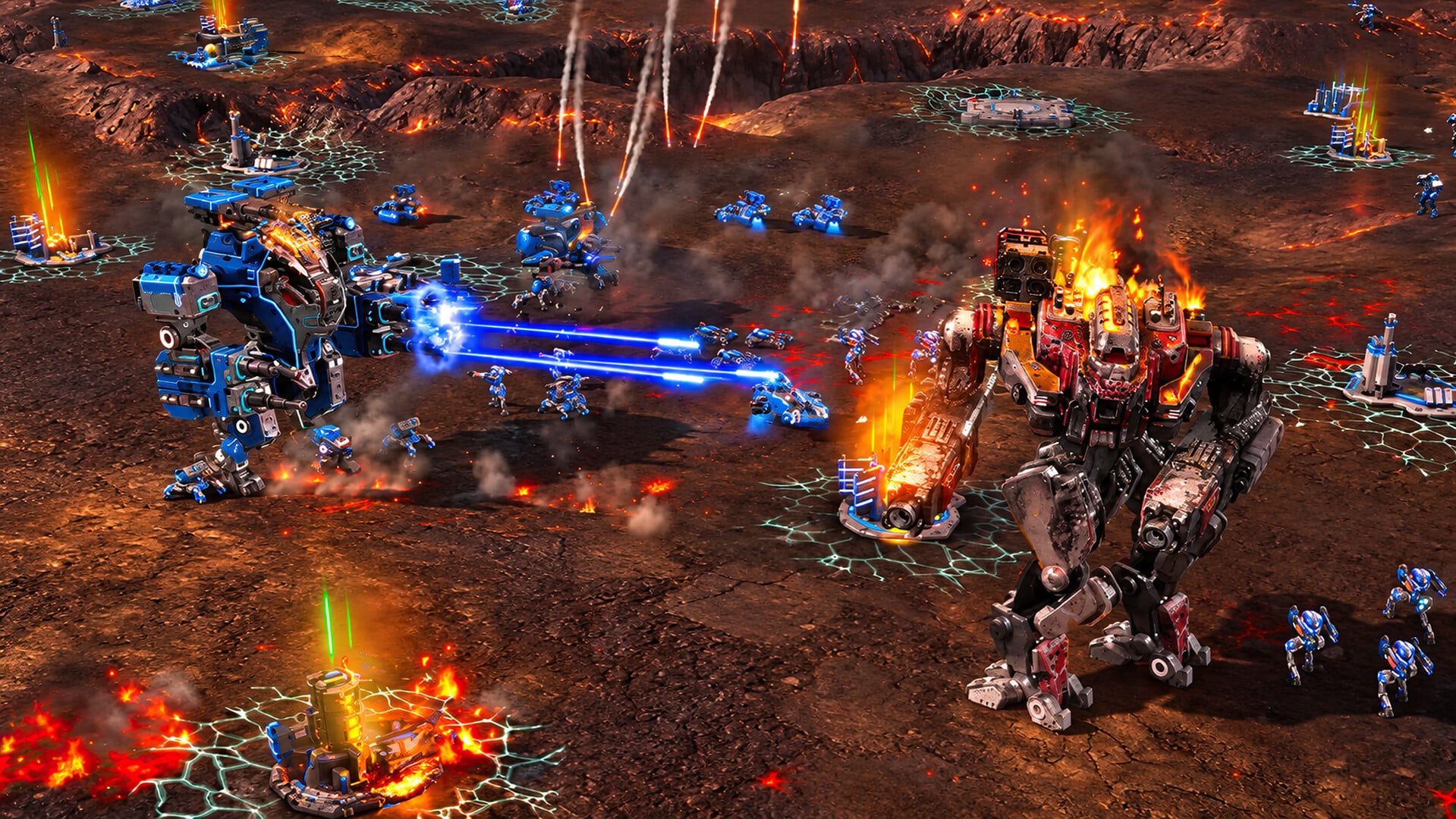
There is a particular kind of RTS player who sees an enormous mechanical army and immediately starts wondering whether the factory can make more. Ashes of the Singularity II knows that player exists. Its appeal is the prospect of commanding a whole front, feeding fresh forces into a fight, and watching a questionable plan become a very expensive crater.
That is a good reason to pay attention. It is also an easy way to overlook the less exciting questions: how much campaign is here, how clearly do orders work, and will the next battle ask anything different? The launch evidence makes those questions harder to wave away.
Review method: This is an editorial-research review of the released PC base game, written November 16, 2026. It uses official information, current player feedback, independent reviews, and documented fixes. PUG Empire is not claiming hands-on testing, campaign completion, measured frame rates, or multiplayer sessions. The category scores are our editorial assessment of that evidence.
Let's break it down using our comprehensive 10-point rating system.
What is Ashes of the Singularity II?
This is a large-scale real-time strategy game from Oxide Games and Stardock Entertainment. Three factions contest the solar system: ordinary humanity's United Earth Forces, the Post-Human Coalition, and the machine civilization of the Substrate. The campaign follows the human side; skirmish and multiplayer open up the other factions, according to Stardock's launch announcement.
Quick Facts:
- Developer: Oxide Games
- Publisher: Stardock Entertainment
- Steam Release Date: November 10, 2026
- Platform: Windows PC; Linux compatibility through Proton is discussed separately below
- Price: $39.99 USD standard price; $31.99 at the US Steam store check on November 16, with the announced launch discount running through November 17
- Genres: Simulation, Strategy; specifically a real-time strategy game
- Players: Single-player, online co-op, and online PvP
- Steam: Ashes of the Singularity II
The live Steam store showed Mixed, with 67% of 473 reviews positive when checked. This is a changing launch-week snapshot. Critics are somewhat warmer: CGMagazine awards 7.5/10, while TheSixthAxis and ZTGD each land at 7/10. The shared message is that the scale works better than the campaign and surrounding polish.
Player reviews show a real split over army control. A positive November 11 review praises managing groups and fighting the skirmish AI; a negative November 10 review describes lost orders and confusing unit movement. These are individual reports, not controlled tests. Disagreement over the game's disclosed AI-assisted content is also visible. That does not establish coordinated review bombing or invalidate criticism of the mechanics.
How we score this review
Each category contributes up to one point to the final score:
- Gameplay Mechanics (1.0 point) - How does it feel to play?
- Graphics & Visual Design (1.0 point) - Does it look good?
- Audio & Sound Design (1.0 point) - How's the audio experience?
- Story & Narrative (1.0 point) - Is there a compelling story?
- Replayability (1.0 point) - Will you keep coming back?
- Multiplayer/Social (1.0 point) - How's the online experience?
- Performance & Optimization (1.0 point) - Does it run well?
- Innovation & Originality (1.0 point) - Does it bring something new?
- Value for Money (1.0 point) - Is it worth the price?
- Overall Fun Factor (1.0 point) - Is the experience worth your time?
These are equally weighted editorial categories, not benchmark results. A strong battle system cannot quietly absorb the points lost to a weak campaign.
1. Gameplay Mechanics: 0.76/1.00
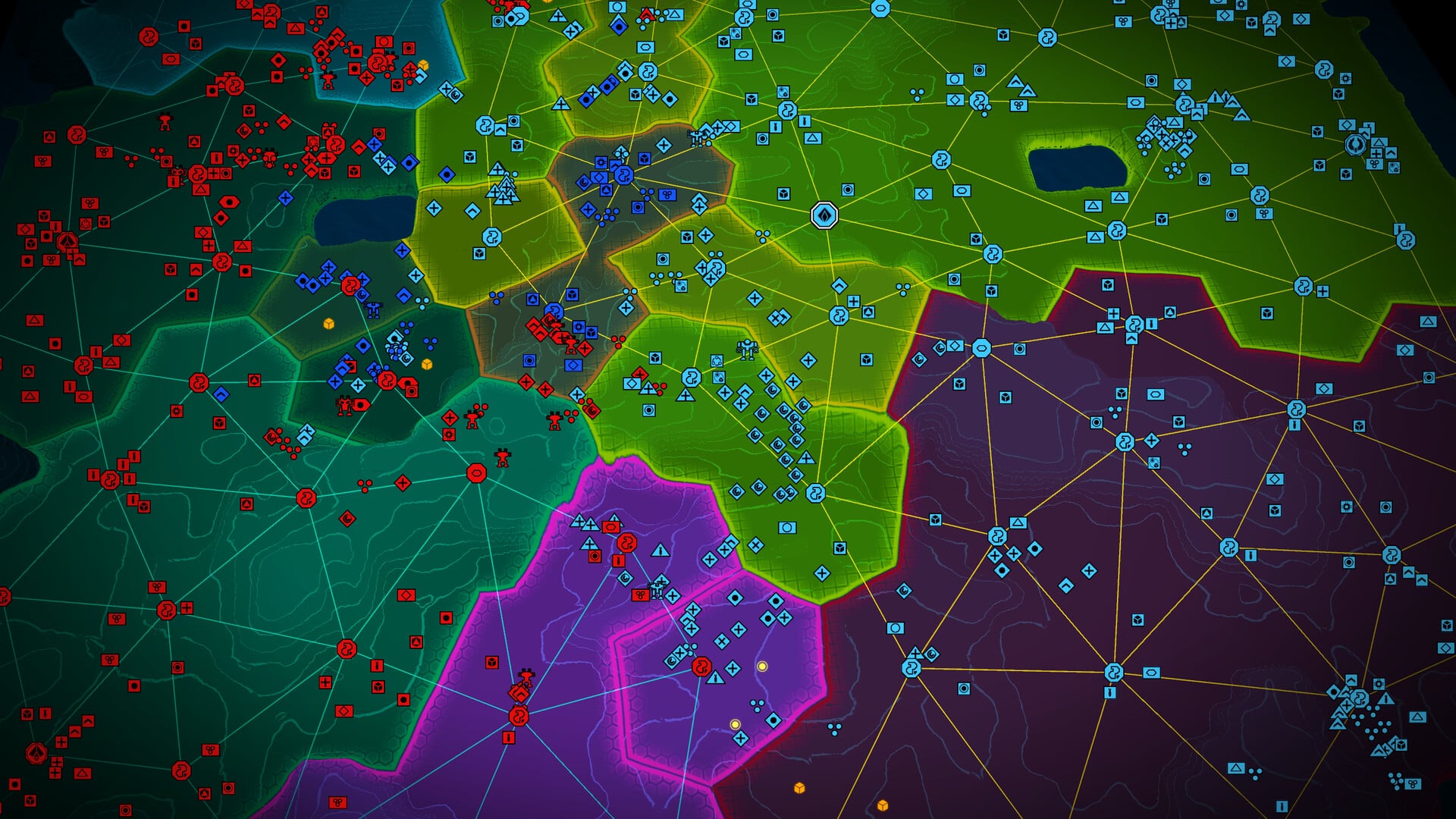
The interesting decision is where an army needs to be and whether the economy can keep it supplied. CGMagazine describes matches built around resource income, territorial expansion, and keeping several fronts alive. That is a promising rhythm for players who enjoy planning a war more than babysitting individual soldiers.
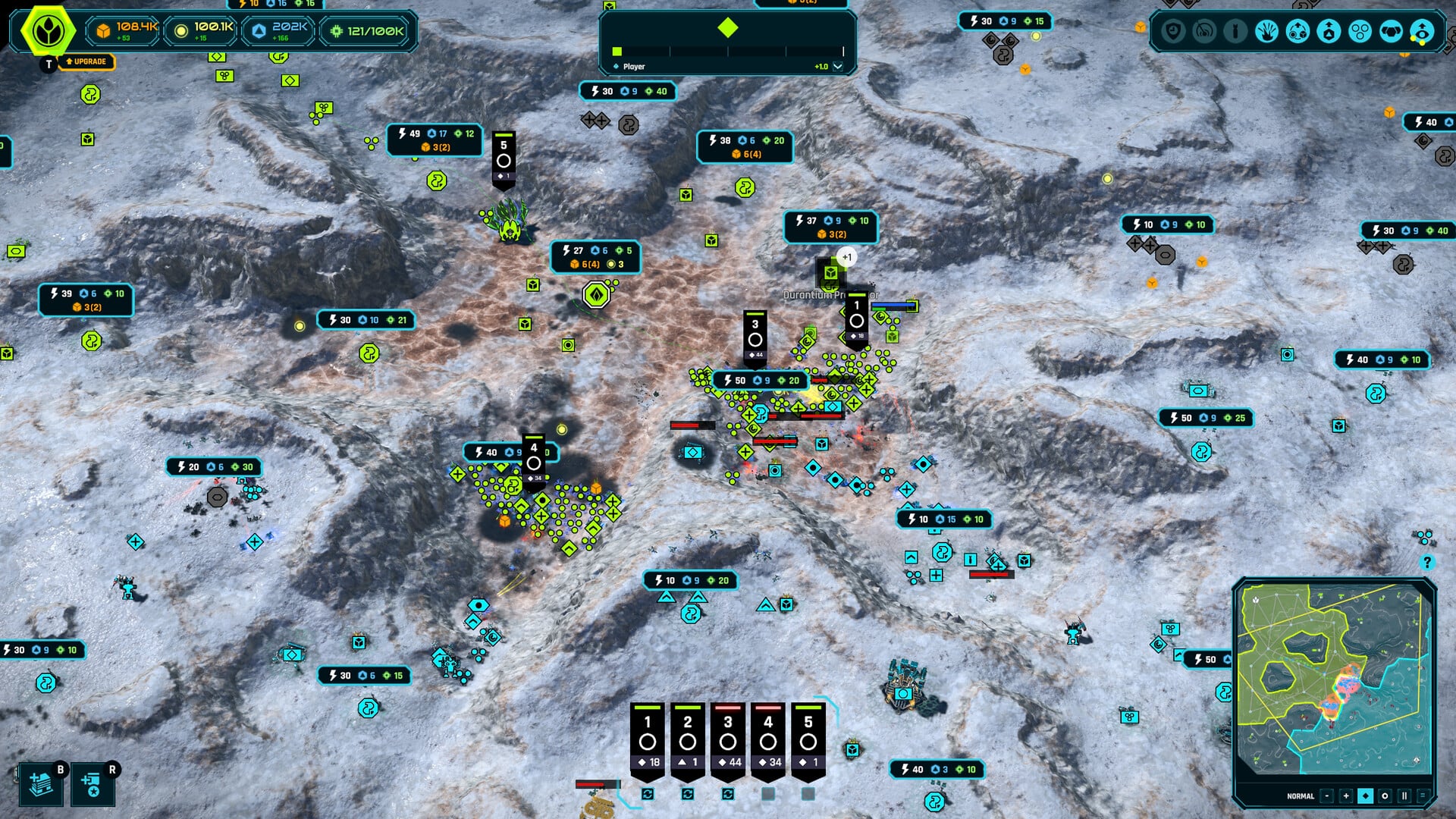
The army system helps make that scale manageable. TheSixthAxis explains how recruits head toward their assigned army and can replenish its losses automatically. In principle, that lets the player spend more attention on composition and positioning. Our judgment is that removing repetitive administration is a worthwhile design choice.
What Works:
- Economic decisions have consequences across the map
- Reinforcements give sustained fighting a clear purpose
- Army composition offers room for planning
The criticism is about control after the plan meets the enemy. Try Hard Guides reports units bunching during combat and limited movement commands. The distinction matters: automating busywork is welcome, but players still need to understand why an army ignores their intent. A game about command needs reliable communication between commander and troops.
Score: 0.76/1.00 - A useful approach to large-scale command, held back by reported movement and control frustrations.
2. Graphics & Visual Design: 0.83/1.00
The official gameplay screenshots do a convincing job of selling the battlefield: towering machines, streaks of fire, and tiny units scattered around much larger threats. The cover's volcanic ground and glowing weapons make the contrast especially clear. Those images establish an aesthetic, not a performance guarantee.
ZTGD praises the lighting and the spectacle of ruined battlefields. Our visual score follows that strength. An RTS should make looking back at the fight worthwhile, even if the practical business of commanding happens farther above it.
Visual Strengths:
- A strong sense of scale between units
- Bright weapon effects against readable terrain shapes
- A satisfying science-fiction battlefield identity
There is disagreement here. GamingOnLinux finds the presentation less impressive, while CGMagazine questions how clearly the factions separate visually. We lean positive on spectacle, with reservations about information density. Being able to admire a fight and being able to read it instantly are different requirements.
Score: 0.83/1.00 - Impressive battlefield scale, with visual clarity doing less to distinguish the factions.
3. Audio & Sound Design: 0.64/1.00
Try Hard Guides singles out battlefield effects and environmental sounds as part of the spectacle. That is the right priority for a game whose basic fantasy involves a considerable amount of machinery exploding. Good impact audio helps a distant clash feel consequential.
Consistency is less reassuring. GamingOnLinux reports low overall volume and uneven dialogue levels. The positive Steam review discussed above also reports crackling effects audio. One player's report does not establish a universal defect, but it is relevant when even an enthusiastic recommendation includes a substantial audio complaint.
Audio Positives:
- Published praise for the sound of large battles
- Environmental detail beyond weapon fire
The official disclosure says some unit barks, notifications, and minor characters use pregenerated ElevenLabs stock voices. It also describes AI processing in some cutscenes. Buyers should have that information accurately; it does not mean every voice or asset is generated. We are not claiming a firsthand assessment of the soundtrack or voice performances.
Score: 0.64/1.00 - Good reported effects work, undermined by mixing concerns and unresolved player reports.
4. Story & Narrative: 0.52/1.00
The premise leaves room for more than another humans-versus-robots war. Uploaded people and a machine civilization can have conflicting ideas about survival, responsibility, and ownership. ZTGD finds the three-way setup more interesting than its delivery, criticizing the campaign's characterization and its competing tutorial duties.
TheSixthAxis reports a ten-mission human campaign that ends before the wider conflict gets enough room. That is a significant limit for buyers who play strategy games primarily for authored scenarios and a story with a payoff.
Narrative Strengths:
- A conflict with more than two obvious sides
- A human viewpoint that provides an entry point
Our judgment is that a promising setting deserves less credit than a satisfying campaign. A tutorial can introduce systems effectively and still leave the narrative feeling thin. Players should not need to become invested in future additions to justify the campaign available today.
Score: 0.52/1.00 - An appealing setup with too little campaign development to carry a story-first purchase.
5. Replayability: 0.73/1.00
Stardock advertises generated battlefields alongside the game's skirmish and online modes. That gives repeat play a practical foundation beyond restarting the campaign. For an RTS group, varying the opposition and map can matter more than another hour of scripted dialogue.
The important reservation comes from CGMagazine's review: different matches can still settle into similar large confrontations. Three factions and fresh geography do not automatically mean three entirely different experiences.
Reasons to Return:
- Experimenting with another faction or army composition
- Adjusting the skirmish challenge
- Playing against people whose plans change between matches
Our score assumes the reader actually likes that central battle rhythm. If the first few encounters already feel repetitive, an additional map is unlikely to fix the problem. If maintaining pressure across several fronts is the attraction, repetition can instead be where mastery starts.
Score: 0.73/1.00 - A solid skirmish foundation whose longevity depends heavily on enjoying its familiar rhythm.
6. Multiplayer/Social: 0.73/1.00
The official feature list confirms online co-op and PvP. For PUG Empire, that makes this more relevant to a community night than a campaign that everyone merely plays separately. Building a plan together is a good starting point for the sort of Discord conversation that eventually becomes somebody blaming the economy.
Social Strengths:
- Cooperative and competitive options
- Army planning gives teammates concrete decisions to discuss
- Skirmish offers a way to learn before arranging a group session
There are limits to what the evidence establishes. GamingOnLinux explicitly did not test online play during its review period. Its otherwise useful technical report cannot substantiate multiplayer stability. We have not verified lobby reliability, matchmaking wait times, or a large competitive population either.
Our score recognizes useful supported modes while withholding the confidence that a tested online service would earn. Organizing a match with friends is the sensible buying plan; purchasing on the assumption of effortless public matchmaking is harder to recommend.
Score: 0.73/1.00 - A credible group-game option, with launch-week online reliability still insufficiently established here.
7. Performance & Optimization: 0.71/1.00
Stardock's November 10 hotfix addresses a Windows 11 launch problem related to Smart App Control. That is a specific documented fix, not evidence that every launch or stability problem has disappeared. This review evaluates the released game with that support acknowledged.
Independent reports differ in useful ways. Try Hard Guides praises performance during large battles. GamingOnLinux reports mostly smooth play and no crashes on its Ryzen 7 9800X3D/Radeon RX 9070 XT system under Proton 11.0-3 RC, but also recurring brief stutters. That is one high-end Linux configuration, not a benchmark for modest Windows PCs.
Technical Positives:
- A documented launch fix arrived immediately
- Published evidence that large battles can run well
Technical Reservations:
- Stutter and audio complaints remain relevant
- Movement bugs affect playability even when frame rates are good
- Linux compatibility reporting does not equal native Linux support
Steam recommends 16 GB RAM, an SSD, and an RTX 3070 or RX 6750 XT-class GPU. We have no measured performance target for those specifications. Handheld owners should seek device-specific testing rather than extrapolate from a powerful desktop.
Score: 0.71/1.00 - Encouraging performance reports, with too many configuration and launch-polish caveats for a stronger assurance.
8. Innovation & Originality: 0.65/1.00
This is where scale needs to earn its keep. More units can create new logistical decisions, but a larger crowd alone does not make an RTS more interesting. The army system is the most persuasive part of the design because it changes what the player spends time managing.
The reviews disagree about how far that change goes. TheSixthAxis sees useful streamlining, while Try Hard Guides finds the combat commands too conventional to make the convenience transformative. That is a meaningful difference in priorities, and both readings can fit the same feature.
Our judgment falls between them. Making a complicated genre easier to command deserves credit. It deserves less if the player gains convenience but loses ways to express a tactical intention. This looks like a worthwhile refinement with a clear audience, rather than a reason to expect the whole genre to change direction.
Score: 0.65/1.00 - Some smart command-level ideas, surrounded by a familiar RTS framework.
9. Value for Money: 0.78/1.00
The $39.99 standard price is easier to justify for a regular skirmish player than for somebody arriving only for a campaign. The $31.99 launch offer improves that calculation temporarily. Prices here are a dated US snapshot, not a promise about the next sale or another region.
Good Value If:
- You want repeated skirmishes rather than a long story campaign
- Your friends already enjoy deliberate RTS matches
- The army-management approach sounds appealing on its own terms
Wait If:
- Campaign length is your main measure of value
- Precise individual-unit control is essential to you
- You need stronger evidence that a reported issue affecting your setup is fixed
Stardock says Premium Edition includes the soundtrack and three upcoming DLC. Our score covers the base game. Unreleased content cannot repair today's value proposition, and nobody should need to buy promises to make a short campaign feel complete.
Score: 0.78/1.00 - Reasonable base-game pricing for repeat players, with a much weaker case for campaign-only buyers.
10. Overall Fun Factor: 0.79/1.00
The strongest recommendation is for the player who enjoys setting a complicated machine in motion and then adjusting it as the battle changes. That is a specific kind of fun. It can survive familiar mechanics and a thin story if the match itself keeps producing decisions worth making.
The broader critical response supports that qualified enthusiasm. Multiple reviews praise the scale while landing around seven out of ten. The Mixed Steam reception adds a reason to take control complaints seriously, rather than treating the spectacle as a universal answer.
What Keeps It Appealing:
- A clear fantasy of commanding an enormous war
- Economic planning that gives battles context
- Room to discuss and compare strategies with friends
What Gets in the Way:
- Reported movement problems can undermine the plan
- A short campaign limits the guided experience
- Repeated battles may stop feeling distinctive
Score: 0.79/1.00 - An appealing prospect for the right RTS player, with enough friction to keep the recommendation narrow.
Final Verdict: 7.14/10.00
Breakdown:
- Gameplay Mechanics: 0.76/1.00
- Graphics & Visual Design: 0.83/1.00
- Audio & Sound Design: 0.64/1.00
- Story & Narrative: 0.52/1.00
- Replayability: 0.73/1.00
- Multiplayer/Social: 0.73/1.00
- Performance & Optimization: 0.71/1.00
- Innovation & Originality: 0.65/1.00
- Value for Money: 0.78/1.00
- Overall Fun Factor: 0.79/1.00
Total: 7.14/10.00
The Bottom Line
Ashes of the Singularity II has a worthwhile proposition for players who want to manage fronts, factories, and armies. The evidence is less convincing for anyone buying it as a major single-player campaign or expecting detailed control of every unit. That distinction should drive the purchase more than the number of explosions in a trailer.
Our 7.14 sits close to the published critical consensus, while retaining substantial deductions for campaign delivery, audio, and limited tactical control. Steam's more divided response is a reason to be cautious, particularly about bugs. Neither an enthusiastic player nor an angry one supplies a universal verdict on its own.
Pros:
- Huge battles with a strong sense of scale
- Army reinforcement reduces repetitive management
- Useful economic and territorial decisions
- Skirmish, online co-op, and competitive options
- Reasonable standard price for repeat players
Cons:
- Short human campaign and underdeveloped narrative
- Reported movement problems and awkward controls
- Audio mixing concerns and player-reported crackling
- Limited tactical commands can frustrate
- Match variety may not sustain every player
Recommendation: Consider it if large-scale skirmishes are the reason you play RTS games, especially with friends who share that taste. Wait for fixes or a sale if campaign depth, fine unit control, or stronger technical certainty matters more. For other community-night options, browse our co-op reviews.
All article media are official gameplay screenshots from Steam app 3499790, credited to Oxide Games and Stardock Entertainment. The header retains its original 1919 x 1080 frame; both body images are 1920 x 1080. These are publisher-supplied screenshots, not PUG Empire captures. No AI-generated cutscene artwork is used.
Would you rather control every tank, or tell the whole army where the problem is and worry about the next front? Bring your preferred level of RTS micromanagement to Discord.
Final Score: 7.14/10.00 - A capable large-scale RTS whose spectacle outperforms its campaign and launch polish.
Behind this article
Sources & editorial notes
This is a research-based editorial review. It draws on published information and the sources below, and does not claim a completed hands-on playthrough.
- Official Steam listing, US pricing, requirements, and AI disclosure, checked November 16, 2026
- Stardock launch announcement and November 10 Windows hotfix
- Current Steam player reviews, checked November 16, 2026
- CGMagazine review, November 10
- TheSixthAxis review, November 10
- Try Hard Guides review, November 10
- GamingOnLinux review and Proton assessment, November 10
- ZTGD review, November 13
Share this article
Written by
ApexInterfectum
Co-Founder, PUG Empire | Army Veteran | Full Stack Developer
ApexInterfectum is an Army veteran and co-founder of PUG Empire, a competitive gaming community built on coordinated team play and continuous improvement. He brings a full-stack development background to community tooling and content infrastructure, and serves as technical subject matter expert across the Dirty Rice platform. His writing covers the systems and strategies behind sustainable content creation, competitive growth, and modern streaming workflows.