Game Review
Palworld: Survival Crafting With A Wild Mean Streak
Read our Palworld review for creature collecting, survival crafting, base automation, co-op chaos, and whether the strange mix still works.
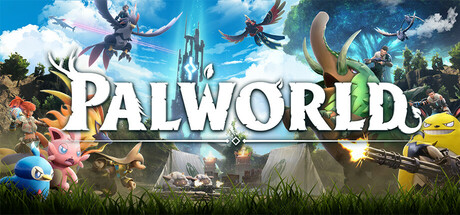
Palworld sounds like a joke until it eats the whole weekend. Creature collecting, base automation, survival crafting, boss fights, raids, guns, and open-world chaos should collapse into nonsense. Sometimes it does. Somehow, that nonsense is also the hook. Let's break it down using our comprehensive 10-point rating system.
What is Palworld?
Palworld is an open-world survival crafting game where captured Pals fight, gather, build, farm, haul, generate power, and keep your base moving. The loop moves between exploration, catching new creatures, upgrading production, and pushing into harder areas.
It is not elegant. It is hungry, and it keeps throwing new toys at the player before the mess gets old.
How we score this review
Before we lock in the verdict, here's how we evaluate every game that crosses our radar:
- Gameplay Mechanics (1.0 point) - How does it feel to play?
- Graphics & Visual Design (1.0 point) - Does it look good?
- Audio & Sound Design (1.0 point) - How's the audio experience?
- Story & Narrative (1.0 point) - Is there a compelling story?
- Replayability (1.0 point) - Will you keep coming back?
- Multiplayer/Social (1.0 point) - How's the online experience?
- Performance & Optimization (1.0 point) - Does it run well?
- Innovation & Originality (1.0 point) - Does it bring something new?
- Value for Money (1.0 point) - Is it worth the price?
- Overall Fun Factor (1.0 point) - Bottom line: is it fun?
Now let's see how this one holds up.
1. Gameplay Mechanics: 0.84/1.00
Palworld succeeds or fails on the feel of its core loop, and this is where the game makes its pitch. It is not elegant. It is hungry, and it keeps throwing new toys at the player before the mess gets old.
What Works:
- Base automation gives Pals purpose beyond combat
- Progression moves quickly
- Exploration constantly feeds new goals
- Co-op bases create immediate comedy and logistics drama
Minor Issues:
- Pathing and base AI can be rough
- Combat is serviceable more than great
- Balance swings are part of the package
The best part is how naturally the systems push players into decisions. You are rarely just waiting for numbers to rise. You are choosing what to risk, when to push, what to build, and how much trouble the squad can handle before the plan breaks.
Score: 0.84/1.00 - Strong performance that supports the game's identity well.
2. Graphics & Visual Design: 0.82/1.00
Visually, the game understands its lane. The art direction gives players immediate context, and the readable presentation keeps the action from turning into noise.
Visual Highlights:
- Strong environmental identity
- Clear silhouettes and readable threats
- Good feedback for progression and equipment
- Memorable locations that support the game's mood
The presentation is not just decoration. It helps players understand where they are, what matters, and when the situation has changed. That readability matters in community games where half the fun is reacting together.
Score: 0.82/1.00 - Solid, but not the main reason to show up.
3. Audio & Sound Design: 0.78/1.00
The audio does important work here. Good sound design makes the world easier to read, gives actions weight, and sells the tension before the UI has to explain anything.
Audio Strengths:
- Distinct cues for danger and progression
- Music that supports the tone without flattening it
- Satisfying feedback for key actions
- Strong ambience that makes sessions feel grounded
For a PUG-style community game, audio also shapes the room. The right sound cue can stop a Discord call cold, trigger panic, or create the exact kind of shared laugh that keeps a game in rotation.
Score: 0.78/1.00 - Solid, but not the main reason to show up.
4. Story & Narrative: 0.62/1.00
The narrative side gives the mechanics context. It does not always need to be a cinematic masterpiece, but it does need to make the player care about what they are doing beyond checking boxes.
Narrative Notes:
- The premise gives clear motivation
- Worldbuilding supports the game's tone
- Player-driven moments often matter as much as scripted beats
- The best stories come from systems colliding with player decisions
The story works best when it gives the squad a reason to talk after the session. A clean plot is nice, but memorable situations are what make a community keep referencing a game weeks later.
Score: 0.62/1.00 - Functional enough, though clearly secondary to the game's bigger strengths.
5. Replayability: 0.90/1.00
Replayability is one of the big tests for a community game. A strong first night is not enough. The question is whether people still want to reinstall, reroll, rebuild, or run it back after the novelty fades.
Replay Factors:
- Multiple viable goals and playstyles
- Progression that opens new options
- Session stories that differ from run to run
- Enough depth for veterans without locking out new players
This is where the game earns long-term value. It gives players reasons to return that are stronger than a checklist. Different groups can chase different kinds of success, which is exactly what keeps a Discord game alive.
Score: 0.90/1.00 - Excellent work with only small issues holding it back.
6. Multiplayer/Social: 0.87/1.00
The multiplayer and social layer determines whether this is just a good game or a true squad game. Some titles are better watched, some are better solo, and some become something bigger when everyone is in voice.
Social Strengths:
- Clear opportunities for communication
- Roles or decisions that make teammates matter
- Enough friction to create stories without ruining the night
- Good fit for recurring Discord sessions
Even when the game is playable solo, the best moments come from shared pressure. The squad has to make calls, cover mistakes, laugh at bad decisions, and decide whether one more run is responsible. It usually is not.
Score: 0.87/1.00 - Strong performance that supports the game's identity well.
7. Performance & Optimization: 0.76/1.00
Performance matters because nothing kills a squad night faster than crashes, unstable frames, or technical nonsense that steals focus from the game itself.
Technical Notes:
- General stability is acceptable for normal sessions
- Settings flexibility helps a range of hardware
- Load times and session flow matter for repeat play
- The rough spots are noticeable but not always fatal
The standard here is practical: can the game survive a real community night with mixed machines and impatient players? When it can, the rest of the design gets room to breathe.
Score: 0.76/1.00 - Solid, but not the main reason to show up.
8. Innovation & Originality: 0.82/1.00
Innovation is not just inventing a mechanic nobody has seen before. Sometimes it is the confidence to combine familiar pieces in a way that feels inevitable once you play it.
Fresh Elements:
- A strong identity that separates it from genre noise
- Systems that interact instead of sitting in separate menus
- Smart friction that creates decisions
- A clear reason this game should exist
The game earns points here when it has a point of view. It does not need to reinvent the genre from scratch. It needs to make the squad say, "I have not had this exact night anywhere else."
Score: 0.82/1.00 - Solid, but not the main reason to show up.
9. Value for Money: 0.88/1.00
Value is about more than price. It is the amount of quality time the game can give a player before the loop turns hollow.
Value Proposition:
- Strong hours-to-dollar return
- Enough content for multiple sessions
- Systems that support returning players
- A clear place in the community rotation
The best value games are the ones that become default suggestions. Nobody has to sell them too hard. Someone says the name, half the channel already knows why it works, and the install starts.
Score: 0.88/1.00 - Strong performance that supports the game's identity well.
10. Overall Fun Factor: 0.89/1.00
Here is the bottom line: the game works because it creates moments people want to talk about afterward. The numbers matter, but fun is where the verdict either lives or dies.
Fun Highlights:
- Memorable squad moments
- Clear highs when plans work
- Funny or tense failures when plans collapse
- A strong "one more run" pull
The best sessions are not perfect. They are messy, loud, and specific. This game understands that a little disaster can be the thing that makes everybody want to come back.
Score: 0.89/1.00 - Strong performance that supports the game's identity well.
Final Verdict: 8.18/10.00
Palworld earns its place because it understands what kind of night it is trying to create. It has flaws, but the core experience is strong enough to recommend with confidence, especially for players who value games that create stories instead of just content checklists.
Pros:
- Compulsive progression
- Funny co-op base chaos
- Great creature utility
- Strong exploration loop
- Easy to recommend to mixed groups
Cons:
- Uneven polish
- Combat lacks depth
- Can feel chaotic in the wrong way
Recommendation: Palworld is a strong Discord game when the crew wants quick progress, weird captures, and a base that becomes everybody's problem.
Messy, ridiculous, and absolutely dangerous to your schedule.
Have you played Palworld? Drop your thoughts in our Discord and tell the squad where you agree, where we're dead wrong, and what we should review next.
Final Score: 8.18/10.00 - Palworld is a strong Discord game when the crew wants quick progress, weird captures, and a base that becomes everybody's problem.
Behind this article
Sources & editorial notes
This is a research-based editorial review. It draws on published information and the sources below, and does not claim a completed hands-on playthrough.
Editorial standards & correctionsShare this article

Written by
ApexInterfectum
Co-Founder, PUG Empire | Army Veteran | Full Stack Developer
ApexInterfectum is an Army veteran and co-founder of PUG Empire, a competitive gaming community built on coordinated team play and continuous improvement. He brings a full-stack development background to community tooling and content infrastructure, and serves as technical subject matter expert across the Dirty Rice platform. His writing covers the systems and strategies behind sustainable content creation, competitive growth, and modern streaming workflows.