Game Review
Elden Ring Nightreign Review: Co-op Souls With A Stopwatch
Elden Ring Nightreign turns FromSoftware combat into a fast three-player survival run. It is intense, strange, and much better when your squad accepts the clock.
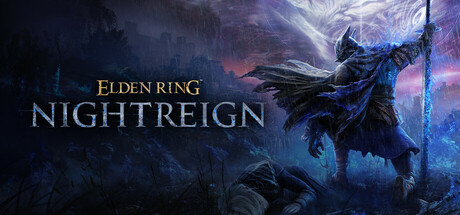
Elden Ring Nightreign sounds like a dare: take FromSoftware combat, strip away the open-world sprawl, put three players under a shrinking clock, and ask them to become competent before the night eats them.
That pitch could have collapsed under its own confidence. Instead, Nightreign has become one of Steam's most interesting co-op action games: not a replacement for Elden Ring, not a normal roguelike, and not a casual hangout game where the group can coast on vibes. It is sharp, demanding, occasionally awkward, and built around the specific pleasure of surviving a bad plan with people who are only slightly more prepared than you are.
Steam's public review summary is Very Positive across a large player base, Bandai Namco has reported multi-million sales, and major critical coverage generally agrees on the shape of the game: the combat and squad tension work, but solo play, narrative depth, and repetition are real caveats. This review is based on verified Steam information, official publisher and patch notes, current player feedback, Steam review data, and reputable critical coverage, not a claimed completed PUG Empire playthrough.
Let's break it down using our comprehensive 10-point rating system.
What is Elden Ring Nightreign?
Elden Ring Nightreign is a standalone multiplayer action RPG from FromSoftware, Inc., published by FromSoftware and Bandai Namco Entertainment. It is set in an alternate version of the Lands Between called Limveld, where players choose preset Nightfarer heroes, scavenge upgrades, fight bosses, survive a closing night cycle, and prepare for a final Nightlord battle.
The official Steam listing identifies the game as a Windows PC release in the Action and RPG genres, released on Steam on May 29, 2025, with a $39.99 USD base price in the United States. The original design focused on three-player co-op and solo play, while later official updates added two-player expeditions after community demand made the gap obvious.
The structure is the important part. Nightreign is not Elden Ring with friends casually wandering the map. It is a compressed run-based game. You drop in, gather power, make fast routing decisions, choose which fights are worth the risk, and try to reach the final boss with a build that can survive more than good intentions.
The verified player signal is strong. Steam's review summary currently sits at Very Positive across more than 180,000 all-language reviews through Steam's public review API. That does not erase the criticisms, but it does show the game found a real audience beyond launch curiosity.
Quick Facts:
- Game: ELDEN RING NIGHTREIGN
- Developer: FromSoftware, Inc.
- Publisher: FromSoftware, Inc., Bandai Namco Entertainment
- Release Date: May 29, 2025 on Steam
- Platform: PC via Steam, Windows listed officially
- Price: $39.99 USD base price
- Genres: Action, RPG
- Steam: Elden Ring Nightreign on Steam
How we score this review
Before we lock in the verdict, here's how we evaluate every game that crosses our radar:
- Gameplay Mechanics (1.0 point) - How does it feel to play?
- Graphics & Visual Design (1.0 point) - Does it look good?
- Audio & Sound Design (1.0 point) - How's the audio experience?
- Story & Narrative (1.0 point) - Is there a compelling story?
- Replayability (1.0 point) - Will you keep coming back?
- Multiplayer/Social (1.0 point) - How's the online experience?
- Performance & Optimization (1.0 point) - Does it run well?
- Innovation & Originality (1.0 point) - Does it bring something new?
- Value for Money (1.0 point) - Is it worth the price?
- Overall Fun Factor (1.0 point) - Bottom line: is it fun?
Now let's see how the night holds up.
1. Gameplay Mechanics: 0.89/1.00
Nightreign works because the combat foundation is still FromSoftware's biggest advantage. Dodging, spacing, stamina, weapon timing, boss reads, and panic recovery all matter. The difference is that the game forces those decisions into a much tighter survival format.
What Works:
- Combat has real weight without losing speed
- Nightfarer classes give squads distinct jobs quickly
- Routing, loot choices, and boss selection create constant pressure
- The closing storm makes hesitation expensive
- Revives and shared boss pressure create real teamwork
- Runs are short enough to invite another attempt
Current Friction:
- The structure can feel harsh before players understand routing
- Some class kits are easier to read than others
- Solo play exposes the systems at their least forgiving
- Random upgrade quality can decide how clean a run feels
- Players expecting full open-world Elden Ring may bounce off the compression
The smartest mechanical choice is the clock. In normal Elden Ring, you can leave, level, farm, explore, and come back stronger. Nightreign does not let the group hide forever. It keeps asking whether this fight is worth the time, whether that chest is worth the detour, and whether the squad is confident or just loud.
That pressure gives the game its identity. It also creates most of the frustration. If your team misses early momentum, the final boss can feel less like a dramatic test and more like a scheduled audit of every bad decision from the last thirty minutes.
Score: 0.89/1.00 - Excellent combat pressure with some run-based friction and solo pain.
2. Graphics & Visual Design: 0.88/1.00
Nightreign is not as surprising as Elden Ring was in 2022, but it still knows how to make danger look expensive. Limveld carries familiar FromSoftware texture: ruined landmarks, monster silhouettes, strange skies, hostile fields, and bosses that walk into the frame like the soundtrack owes them money.
Visual Highlights:
- Boss designs remain readable and intimidating
- Limveld is easy to parse under time pressure
- Night effects give the run structure a strong identity
- Character silhouettes help squads identify roles quickly
- Reused Elden Ring DNA still looks strong in motion
The visual design has a practical job here. A normal open-world game can afford slow environmental appreciation. Nightreign needs players to read threats, routes, towers, bosses, pickups, and teammates quickly. Most of the time, it does that well.
The criticism is not that the game looks bad. It is that the familiarity is obvious. Nightreign uses a lot of Elden Ring language and remix energy, so it rarely lands the same shock of discovery as the original Lands Between. The best new images are tied to the night cycle, the Nightlords, and the way the map starts feeling like a trap instead of a playground.
Score: 0.88/1.00 - Strong art direction and readable combat spaces, though the reuse is easy to feel.
3. Audio & Sound Design: 0.86/1.00
The audio has two jobs: sell FromSoftware menace and keep the squad oriented when everything starts going wrong. It succeeds more often than not.
Audio Strengths:
- Boss music gives major fights proper weight
- Combat effects make hits, dodges, and staggers readable
- Environmental audio supports the night-cycle pressure
- Enemy cues help players survive crowded fights
- Squad communication naturally becomes part of the soundscape
Nightreign's best audio moments happen when the group goes quiet. A boss winds up. Someone is one hit from death. A revive is possible, but only if another player commits. In that moment, the game does not need to say much. The sound of an incoming attack is enough.
The weaker side is repetition. Run-based games ask players to hear the same categories of cues over and over, and Nightreign's audio is more functional than transformative between sessions. It supports the loop extremely well, but it is not the main reason people keep queueing.
Score: 0.86/1.00 - Strong combat audio and boss presence, with some repetition over long sessions.
4. Story & Narrative: 0.63/1.00
Nightreign has lore, flavor, and FromSoftware mood. It does not have the same narrative pull as a full Elden Ring journey.
Narrative Notes:
- The Nightfarer concept gives each character a clear identity
- Limveld's alternate-world setup creates useful mystery
- The Nightlords give runs a clean final target
- The strongest stories are player-created failures and recoveries
- Traditional exploration storytelling is much thinner than Elden Ring
This is not a lore-free arcade mode, but the format changes what story can do. A timed co-op run does not invite the same slow reading, wandering, and environmental obsession that made Elden Ring feel mythic. Nightreign is more interested in whether your build survives the next boss than whether you stopped to decode a statue.
That is fine for the game it is trying to be. It still lowers the narrative score. The authored story is more seasoning than meal, and players who come to FromSoftware mostly for world archaeology may find this version lighter than expected.
Score: 0.63/1.00 - Good atmosphere and character framing, but thin compared with full Elden Ring.
5. Replayability: 0.84/1.00
Replayability is the whole bargain. Nightreign wants players to lose, learn, reroute, try a different Nightfarer, chase a cleaner build, and eventually turn chaos into procedure.
Replay Factors:
- Different Nightfarers change squad rhythm
- Boss targets and routing choices push different priorities
- Randomized rewards create run-to-run variance
- Later updates and DLC have expanded the pool of encounters
- Co-op chemistry makes the same objective feel different with different groups
The loop has a strong "one more run" pull when the team is close. It is easy to blame one mistake, one missed revive, one bad route, or one underpowered build, then immediately decide the next attempt will be cleaner. That is dangerous in the right way.
The ceiling depends on tolerance for repetition. Nightreign is more compact than Elden Ring by design, and once players understand the efficient patterns, some of the mystery turns into route discipline. That can be satisfying for optimization-minded squads, but less exciting for players who need constant novelty.
Score: 0.84/1.00 - Strong run-based replay value, especially for squads that enjoy improvement loops.
6. Multiplayer/Social: 0.82/1.00
This is the category that makes Nightreign relevant to PUG Empire. It is one of the rare FromSoftware games where the social layer is not a workaround, a summon sign ritual, or a modded wish. The co-op run is the point.
Social Strengths:
- Three-player co-op gives fights real squad pressure
- Two-player support now fills an important missing group size
- Revives create heroic and humiliating moments
- Different Nightfarer roles let players specialize quickly
- Boss attempts are excellent Discord call material
The game is at its best when everyone understands the pace. One player routes. One player gets greedy. One player realizes the group is underleveled and says nothing because the boss is already moving. That is a very specific kind of co-op tension, and Nightreign is good at manufacturing it.
The social score is capped because the game is not a frictionless party machine. It is demanding, timing-heavy, and punishing enough that mixed-skill groups may split into "this rules" and "why are we doing this to ourselves" camps. Communication tools and matchmaking expectations have also been part of the broader player conversation, especially around launch and group-size support.
For the right crew, Nightreign is excellent. For a casual rotating community night, it needs buy-in.
Score: 0.82/1.00 - Strong squad tension, but not an easy fit for every friend group.
7. Performance & Optimization: 0.77/1.00
Nightreign is generally in better technical shape than many ambitious co-op launches, but it has not been free of PC complaints. Player feedback and patch notes have pointed to network issues, balance adjustments, stability work, input fixes, boss tuning, and quality-of-life changes over time.
Technical Notes:
- Steam lists Windows support and full controller support
- Public Steam reviews remain Very Positive despite early complaints
- Official updates have adjusted matchmaking, balance, bugs, and expedition flow
- Solo and co-op balance have both required post-launch attention
- Some PC players have reported stutter, connection issues, or inconsistent performance
The practical question is whether Nightreign can survive a normal squad night. For many groups, yes. The bigger caveat is that co-op action games have less tolerance for technical noise than slower games. A hitch during a boss swing or a disconnect near the end of a run hits harder than it would in a relaxed sandbox.
FromSoftware and Bandai Namco have clearly supported the game after launch, including the two-player mode update and later content support. That improves confidence, but the score still reflects a game whose technical discussion has not been spotless.
Score: 0.77/1.00 - Solid enough for most squads, with PC and networking rough spots still worth noting.
8. Innovation & Originality: 0.82/1.00
Nightreign is not original because it invents a new combat language. It is original because it uses an existing combat language in a format FromSoftware normally avoids.
Fresh Elements:
- Soulslike combat compressed into a timed survival run
- Preset Nightfarers replace open-ended character planning
- Closing-map pressure changes how players evaluate risk
- Boss preparation becomes a whole-run team problem
- Co-op is central instead of optional garnish
There are familiar pieces everywhere: battle royale pressure, roguelite structure, extraction pacing, hero selection, and Elden Ring combat. The interesting part is how awkward those pieces should be together and how often Nightreign makes them work anyway.
It does not always feel elegant. Some players will see the run format as a brilliant remix. Others will see it as Elden Ring cut into pieces and timed. Both reactions make sense. The score lands high because Nightreign has a clear identity, not because every experiment is universally lovable.
Score: 0.82/1.00 - A bold remix of familiar pieces with a real point of view.
9. Value for Money: 0.80/1.00
At $39.99 USD, Nightreign is priced below a full premium release but well above the impulse-buy co-op zone. That makes the value question depend heavily on whether the format clicks with your group.
Value Proposition:
- Strong combat foundation
- High replay potential for dedicated squads
- Multi-million sales and large Steam review volume show real staying power
- Post-launch updates have addressed major feedback points
- DLC and updates expand the long-term content pool
Value Caveats:
- Solo-first players get a weaker deal
- Players wanting Elden Ring 2 will be disappointed
- Repetition can reduce value if the loop does not hook you
- The price is harder to justify for one or two casual nights
For a squad that wants a serious co-op action challenge, the value is strong. For someone who just wants more Elden Ring exploration, it is much less automatic. This is not a universal recommendation at forty dollars. It is a targeted one.
Score: 0.80/1.00 - Good value for committed co-op action players, cautious value for everyone else.
10. Overall Fun Factor: 0.88/1.00
Nightreign is fun because it makes competence feel social. A clean dodge is good. A clean revive under boss pressure is better. A final kill after the whole squad looked doomed is the kind of thing people explain too loudly afterward.
Fun Highlights:
- Boss fights create instant group drama
- Runs are tense without requiring huge time blocks
- Failure usually teaches something concrete
- Different Nightfarers let players find a role
- The best wins feel earned, not handed out
The fun is not soft. Nightreign can be stressful, repetitive, and occasionally rude about how quickly a plan collapses. That is part of the appeal for Souls players and part of the warning for everybody else.
When it lands, though, it lands hard. It turns a FromSoftware boss fight into a shared survival problem and gives every player a chance to be either the clutch save or the reason the recap gets spicy.
Score: 0.88/1.00 - A tense, rewarding co-op loop for squads that enjoy pressure.
Final Verdict: 8.19/10.00
Breakdown:
- Gameplay Mechanics: 0.89/1.00
- Graphics & Visual Design: 0.88/1.00
- Audio & Sound Design: 0.86/1.00
- Story & Narrative: 0.63/1.00
- Replayability: 0.84/1.00
- Multiplayer/Social: 0.82/1.00
- Performance & Optimization: 0.77/1.00
- Innovation & Originality: 0.82/1.00
- Value for Money: 0.80/1.00
- Overall Fun Factor: 0.88/1.00
Total: 8.19/10.00
The Bottom Line
Elden Ring Nightreign is a strong, strange co-op experiment from a studio that did not take the safest route. It compresses Souls combat into a survival run, makes team pacing matter, and creates boss fights that feel like group exams with weapons.
It is also not Elden Ring 2, not a rich narrative expedition, and not the best FromSoftware experience for solo players. The format is demanding, the repetition can show, and the social layer needs the right crew to shine. Those criticisms are real, and they keep the score from climbing into the franchise's highest tier.
Even with those caveats, Nightreign is easy to respect and easier to recommend to the correct audience. If your squad likes pressure, boss learning, shared failure, and the kind of game that punishes sloppy confidence, this belongs on the list.
Pros:
- Excellent FromSoftware combat foundation
- Strong co-op boss pressure
- Distinct Nightfarer roles
- Fast run structure with real replay pull
- Memorable wins and failures
- Official updates addressed major community requests
Cons:
- Solo play is weaker than co-op
- Narrative is thinner than mainline Elden Ring
- Repetition can set in for some players
- Mixed-skill groups may struggle
- PC and network complaints remain part of the conversation
- Price is not impulse-buy cheap
Recommendation: Elden Ring Nightreign is worth picking up if your group wants a serious co-op action challenge and understands that this is a timed survival remix, not a full open-world sequel. Solo players and lore-first wanderers should be more cautious.
Bring patience. Bring a squad. Bring somebody who can admit when the route was bad.
Have you survived Nightreign with your crew? Drop your cleanest revive, worst route call, or loudest Nightlord wipe in our Discord and tell us what we should review next.
Final Score: 8.19/10.00 - Elden Ring Nightreign is a tense, inventive co-op Souls remix with real squad-night power and enough caveats to keep the recommendation targeted.
Behind this article
Sources & editorial notes
This is a research-based editorial review. It draws on published information and the sources below, and does not claim a completed hands-on playthrough.
Editorial standards & correctionsShare this article
Written by
ApexInterfectum
Co-Founder, PUG Empire | Army Veteran | Full Stack Developer
ApexInterfectum is an Army veteran and co-founder of PUG Empire, a competitive gaming community built on coordinated team play and continuous improvement. He brings a full-stack development background to community tooling and content infrastructure, and serves as technical subject matter expert across the Dirty Rice platform. His writing covers the systems and strategies behind sustainable content creation, competitive growth, and modern streaming workflows.