Game Review
Kingdom Come: Deliverance II Review: A Medieval RPG That Lets You Be Bad at Being a Hero
Kingdom Come: Deliverance II turns historical role-playing into a dense, funny, demanding adventure with exceptional quest craft and a much stronger technical foundation, though its deliberate pace and solo-only design will not suit every PUG.
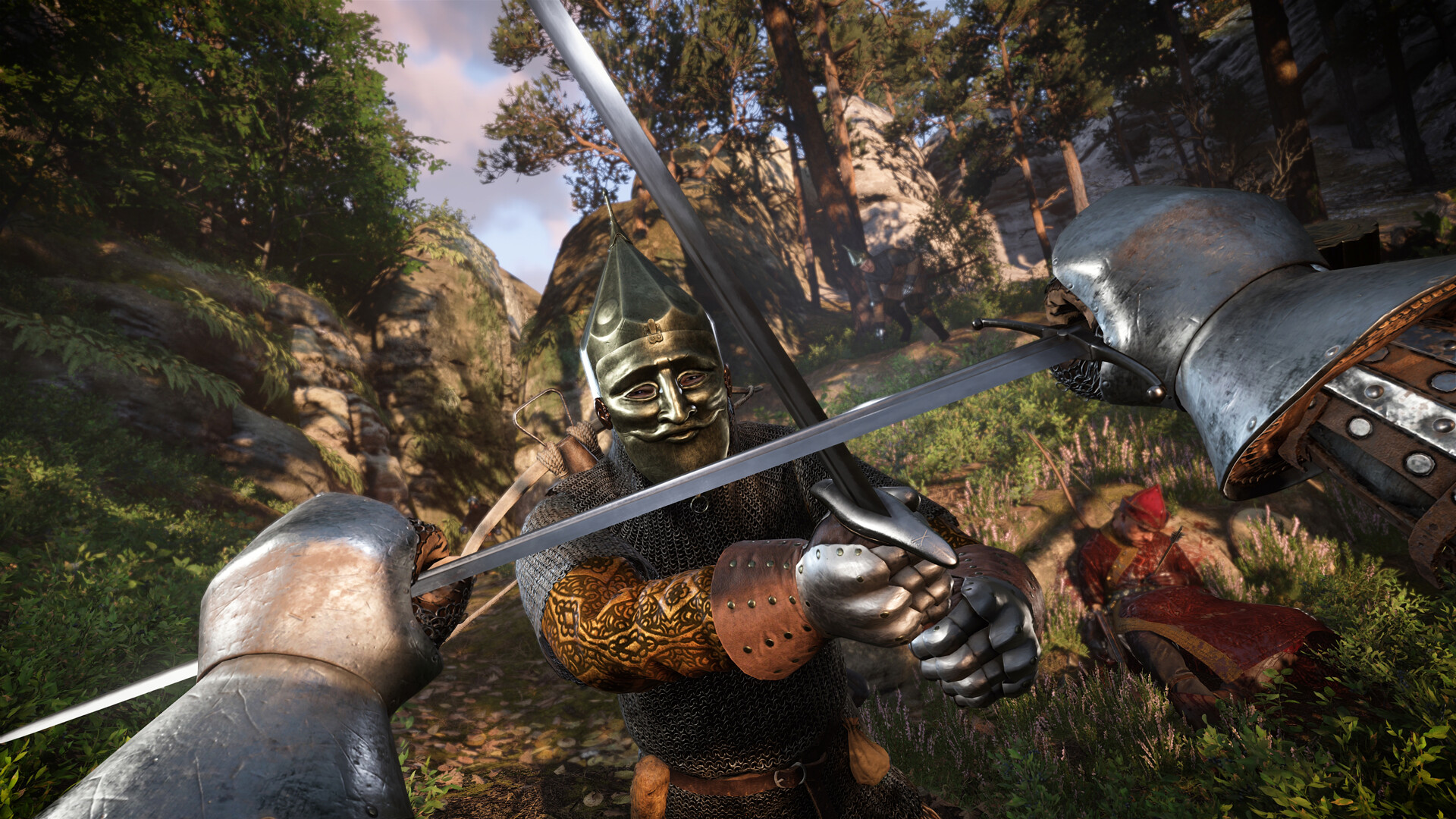
Kingdom Come: Deliverance II has the confidence to make you earn a simple conversation. You do not arrive in Bohemia as an unstoppable chosen one. You arrive as Henry, muddy, underprepared, and entirely capable of embarrassing himself in front of a noble, a blacksmith, or a very determined dog. That commitment is the sequel's whole personality. It is a huge historical RPG that prefers consequence to convenience, and it is much better for it.
Warhorse Studios has not sanded every strange edge off the first game. Combat still asks for patience, hunger and appearance still matter, and the early hours will absolutely punish anyone trying to sprint through them like a conventional power fantasy. The difference is that the sequel is more generous with its lessons, more consistent in its writing, and substantially more reliable on PC. When its systems click together, a stolen outfit, a badly chosen lie, or an overdue bath can change a quest in ways that feel authored without feeling predetermined.
Verified Steam information lists Kingdom Come: Deliverance II as a single-player action, adventure, and RPG game from developer Warhorse Studios and publisher Deep Silver. It released on February 4, 2025 for Windows on Steam at $59.99 USD, with PlayStation 5 and Xbox Series X|S versions also available. Steam lists controller support, Steam Cloud, achievements, and a 100 GB storage requirement. This review discusses the current base game and its support history, not a claimed PUG Empire playthrough or a claim that every DLC is required for the recommendation.
The critical and player consensus is unusually enthusiastic. PC Gamer called it a bold, peculiar RPG classic, while GameSpot praised its historical detail, quest work, and the way its demanding mechanics support the setting. That praise is earned, but there is a meaningful disagreement at its center: some players see friction that creates immersion, while others see friction that wastes time. Both reactions are reasonable. This is an editorial-research review based on official Steam information and patch notes, current store feedback, performance reporting, and published critical coverage.
Let's break it down using our comprehensive 10-point rating system.
What is Kingdom Come: Deliverance II?
Kingdom Come: Deliverance II is a first-person, open-world historical RPG set in fifteenth-century Bohemia. It continues Henry's story from the first game, but its early setup, tutorials, and character introduction give new players a workable path in. The game moves between intimate village problems, political conflict, crime, sword fights, survival routines, and sprawling quest lines that can be solved through combat, stealth, charm, investigation, or a spectacularly unconvincing excuse.
This is not fantasy medievalism. There are no dragons, magic trees, or party members throwing fireballs on a cooldown. Equipment, social standing, food, sleep, wounds, crime, and skill practice are part of the role-playing. The grounded premise is not a gimmick. It shapes how the map, quests, combat, and humor fit together.
Quick Facts:
- Game: Kingdom Come: Deliverance II
- Developer: Warhorse Studios
- Publisher: Deep Silver
- Steam Release Date: February 4, 2025
- Platforms: PC via Steam, PlayStation 5, Xbox Series X|S
- Price: $59.99 USD on Steam at research time
- Genres: Action, adventure, historical RPG
- Players: Single-player
- Steam: Kingdom Come: Deliverance II on Steam
How we score this review
Before we lock in the verdict, here's how we evaluate every game that crosses our radar:
- Gameplay Mechanics (1.0 point) - How does it feel to play?
- Graphics & Visual Design (1.0 point) - Does it look good?
- Audio & Sound Design (1.0 point) - How's the audio experience?
- Story & Narrative (1.0 point) - Is there a compelling story?
- Replayability (1.0 point) - Will you keep coming back?
- Multiplayer/Social (1.0 point) - How's the online experience?
- Performance & Optimization (1.0 point) - Does it run well?
- Innovation & Originality (1.0 point) - Does it bring something new?
- Value for Money (1.0 point) - Is it worth the price?
- Overall Fun Factor (1.0 point) - Bottom line: is it fun?
Now, put on a clean shirt before you try to persuade anybody important.
1. Gameplay Mechanics: 0.90/1.00
The sequel's best mechanical decision is to treat role-playing as more than dialogue wheels and damage numbers. Henry gets better because he trains, reads, practices, dresses for the situation, and learns how the people around him behave. A higher stat is useful, but a plan also needs a believable disguise, enough food, a way past a guard, and sometimes a willingness to accept that the plan was terrible.
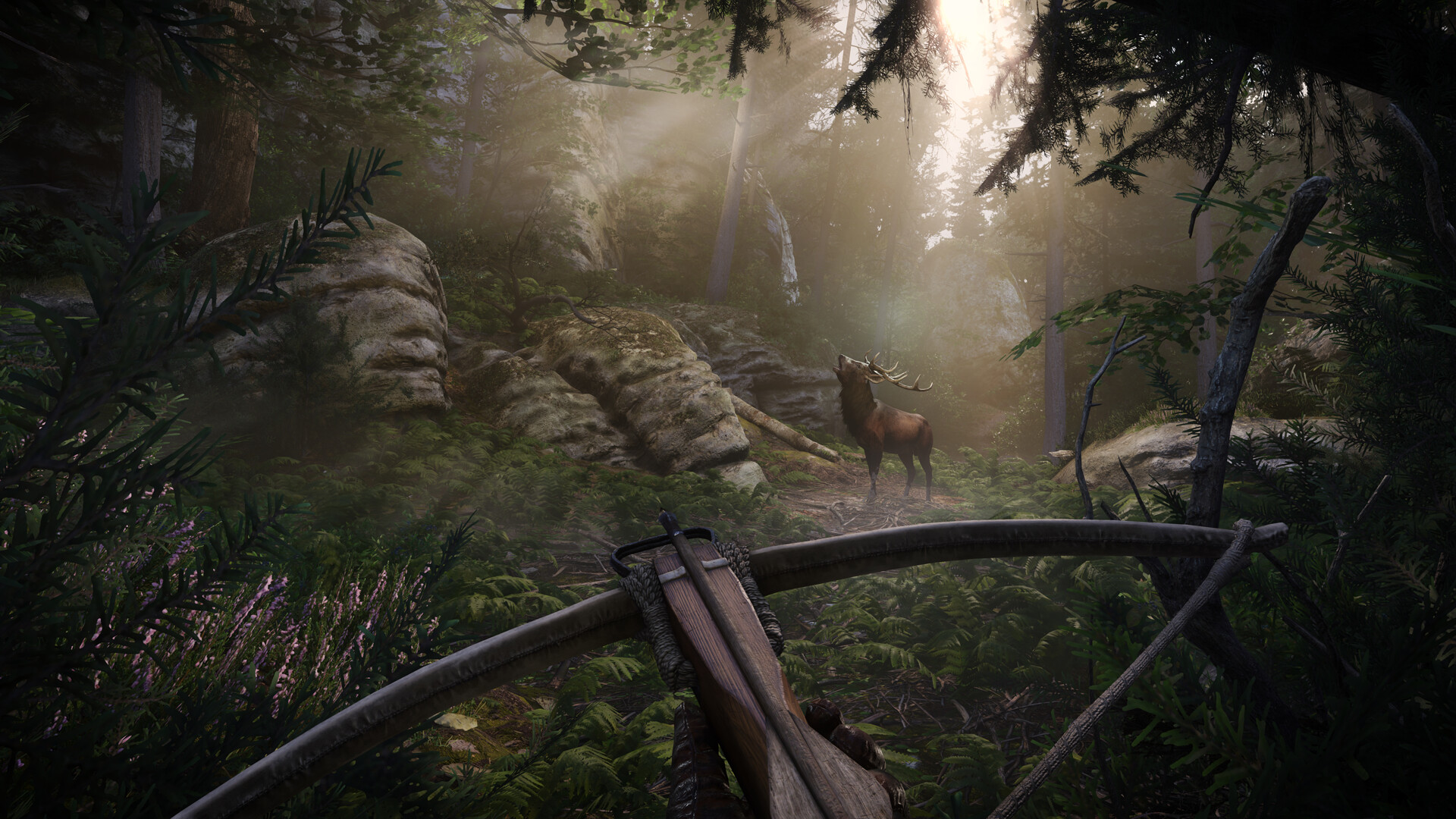
Combat remains deliberately physical. The first-person swordplay emphasizes timing, direction, stamina, armor coverage, and positioning. It is not as immediately legible as a modern character-action game, especially in crowded fights. It is far more convincing when a trained opponent turns an overconfident brawl into an injury and a very expensive repair bill. Bows, crossbows, stealth, alchemy, hunting, theft, and dialogue skill checks give players ways to avoid making every problem a sword problem.
What Works:
- Interlocking survival, reputation, clothing, and skill systems support the role-play
- Quest problems often allow combat, stealth, charm, investigation, or refusal
- Training and practice make improvement feel earned
- The crime and reputation systems give towns a memory
- Combat rewards preparation and positioning over button mashing
- Small activities, from dice to blacksmithing, give the world useful texture
Current Friction:
- The opening hours require patience and attention
- First-person melee has a real learning curve
- Inventory and maintenance routines can feel heavy for action-first players
- Multiple enemies can expose the limits of lock-on and spatial awareness
The important distinction is intention. Kingdom Come II asks players to inhabit Henry's limits, but it offers more ways to understand and work around those limits than its predecessor. That is why the systems feel demanding rather than merely obstructive most of the time.
Score: 0.90/1.00 - Deep, reactive role-playing systems that make success feel earned, even when the learning curve fights back.
2. Graphics & Visual Design: 0.91/1.00
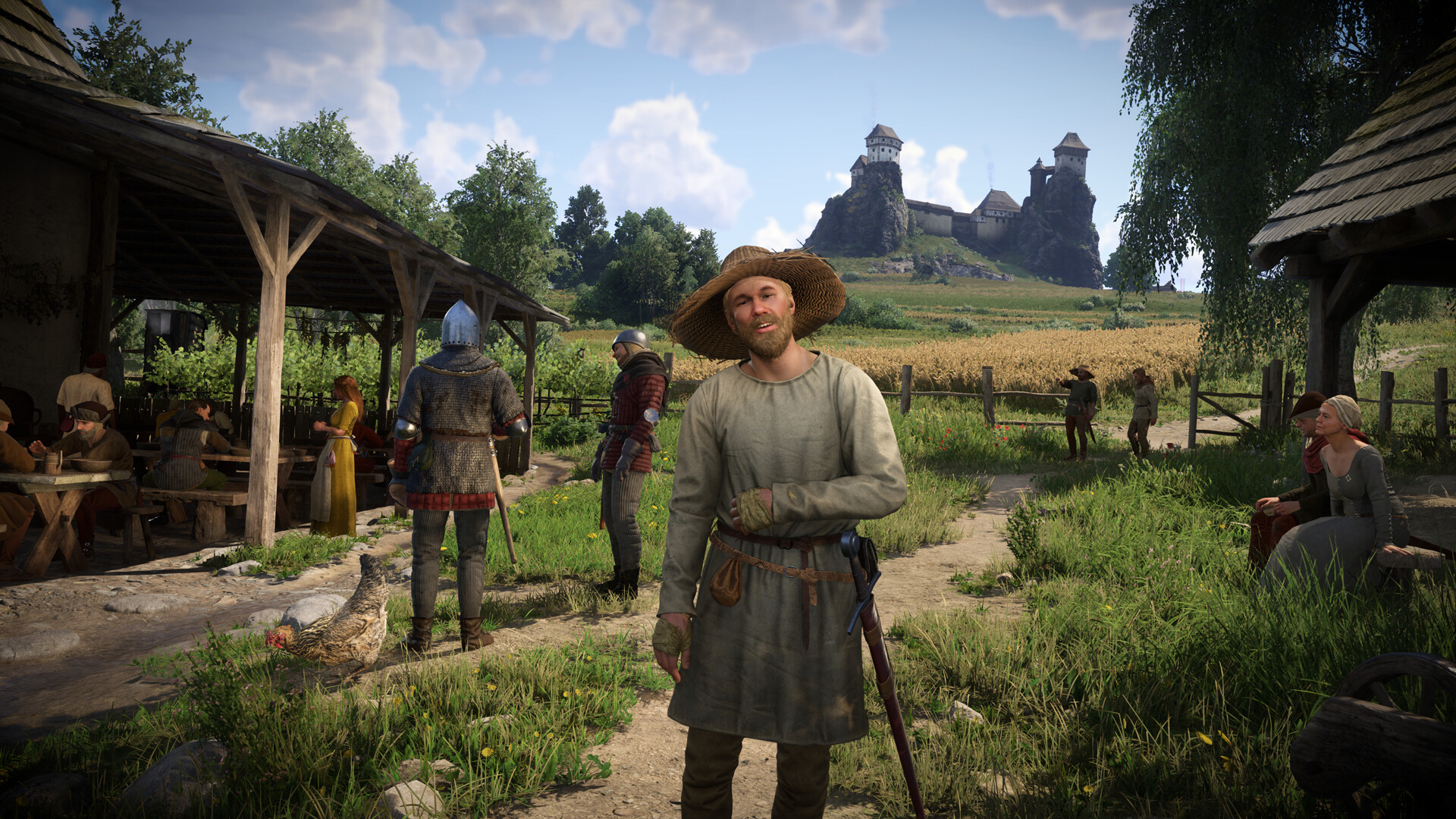
Bohemia is beautiful without being polished into a postcard. Mud tracks, busy markets, worn clothes, weathered walls, dark forests, and enormous fortifications all communicate a place where people live and work. The two major regions provide different kinds of scale, from rural paths and villages to the density and social pressure of Kuttenberg.
The strongest visual design choice is restraint. Armor looks heavy because it is heavy. Wealth signals itself through fabric, tailoring, color, and cleanliness. A filthy traveler in battered gear does not read like a hero, and that visual fact matters when the game is deciding who takes Henry seriously.
Visual Highlights:
- Richly observed villages, woodland, castles, and urban spaces
- Clothing and equipment support the social systems instead of merely decorating them
- Daylight, candlelight, and weather make travel feel distinct
- Dense towns feel busy without losing important landmarks
- First-person presentation strengthens the sense of material detail
Facial animation and incidental character movement are not flawless. The game can still look awkward when an emotional scene asks too much from a side character's expression. But the broader art direction does the difficult thing: it makes a historical world inviting without turning it into a theme park.
Score: 0.91/1.00 - A detailed, cohesive vision of medieval Bohemia where visual detail actively supports the RPG systems.
3. Audio & Sound Design: 0.87/1.00
The soundscape understands that this world needs to be noisy in the right places. Markets chatter, metal work rings out, taverns fill with music and arguments, and the countryside can become unsettlingly quiet. Music knows when to give a scene grandeur and when to let footsteps, armor, and a bad conversation do the work.
Voice work carries a huge part of the experience. Henry and the major cast have enough personality to support scenes that are sincere, absurd, political, or embarrassingly petty. That tonal flexibility is a major advantage. The game can move from a serious historical conflict to a quest that feels like a medieval sitcom without collapsing into parody.
Audio Strengths:
- Excellent environmental sound in towns, taverns, and the countryside
- Strong lead performances and memorable quest characters
- Music supports tension and comedy without constantly demanding attention
- Weapon, armor, and work sounds reinforce the tactile world
- Localization and subtitle options make a dialogue-heavy game more approachable
Some incidental delivery and repeated bark lines remain ordinary open-world material. The score is not here because every passing NPC sounds unique. It is here because the main performances and ambient sound make the world feel consistently present.
Score: 0.87/1.00 - Strong performances and grounded ambience that make Bohemia feel busy, dangerous, and occasionally ridiculous.
4. Story & Narrative: 0.92/1.00
Kingdom Come II is at its best when it remembers that history is not only kings and battles. It is also gossip, labor, faith, family, food, local grudges, and the small humiliations that become a person's entire day. Henry's story carries forward personal stakes from the first game, but the sequel gives its supporting cast, rivalries, and regional conflicts much more room to breathe.
GameSpot's review praised the living quality of its quests, and PC Gamer highlighted how closely the story is tied to the politics of its 1403 setting. Those are compatible observations. The major plot has momentum, but the side material is where Warhorse proves it understands character. A detour can become a crime story, a farce, an act of kindness, or an ugly reminder that the player is not the only person with a problem.
Narrative Strengths:
- A grounded historical setting with clear personal and political stakes
- Quest writing makes room for humor, failure, and unexpected methods
- Henry is more defined without becoming a fixed role-playing puppet
- Supporting characters have texture beyond quest markers
- Side stories regularly feel worth remembering
The caveat is continuity. Newcomers can follow the main situation, but players who know the first game will get the full emotional weight of relationships and callbacks. The pace also has room for detours, which will be a strength for some and a reason to check a guide for others.
Score: 0.92/1.00 - Exceptionally well-observed quest writing and a historical story that gives its people as much weight as its plot.
5. Replayability: 0.84/1.00
This is a large RPG with more branching than a single clean ending suggests. Different skills, clothes, moral choices, stealth routes, combat styles, romances, crimes, side activities, and quest outcomes make a second Henry look genuinely different from the first. The game's reputation systems also turn small choices into social consequences, not just a color change on a final slideshow.
Its replayability has a natural limit. The main narrative remains authored, and the deliberate opening is not equally appealing on every return. This is not an endlessly renewable sandbox in the way a survival game or competitive shooter can be. It is a substantial role-playing journey whose options reward curiosity.
Replay Factors:
- Quests support multiple approaches and outcomes
- Different builds change combat and conversation possibilities
- Crime, reputation, clothing, and social status create alternate routes
- A dense world supports exploration beyond the main path
- Post-launch updates added features and fixes rather than abandoning the game after launch
Replay Limits:
- Solo campaign structure has a defined narrative end
- Early learning and travel pacing can be slower on repeat
- Players who completed their preferred Henry may not need every branch
- The size of the game makes a full second run a serious time commitment
Score: 0.84/1.00 - A dense authored RPG with meaningful alternate approaches, but not an infinite hobby game.
6. Multiplayer/Social: 0.38/1.00
Kingdom Come: Deliverance II is single-player. Steam does not list co-op, PvP, or shared progression, and prospective buyers should not mistake a lively online discussion community for a multiplayer feature. That fact matters in the PUG Empire rubric.
There is still social value around the game. Its quests produce great Discord stories, the historical details invite discussion, and its strange outcomes are easy to share. Watching a friend attempt diplomacy while covered in mud is its own kind of group entertainment. None of that replaces playing together.
Social Strengths:
- Excellent conversation and streaming game
- Wild quest outcomes and role-playing choices are easy to share
- Historical detail creates good community discussion
- A large player community keeps guides and discoveries active
Social Limits:
- No co-op campaign
- No competitive or shared modes
- No party progression or community-night gameplay
- Every adventure is fundamentally Henry's alone
Score: 0.38/1.00 - A great game to talk about with friends, not a game to play alongside them.
7. Performance & Optimization: 0.87/1.00
The sequel's technical condition is one of its most encouraging improvements. PC Gamer's launch performance analysis found scalable frame rates and very little stutter across its tested hardware, a meaningful result for an open-world RPG. GameSpot also reported an unusually stable long PC review period compared with the first game's reputation for severe bugs.
That does not mean the current game is frozen in amber. Warhorse has continued shipping fixes. The official Patch 1.2 announcement added Barber Mode and modding support alongside a large group of combat, NPC, UI, and bug fixes; the official 1.5.2 hotfix continued stability and quest work. Recent player feedback remains broadly favorable but still includes the normal mix of platform-specific issues, quest edge cases, and patch regressions. Treat that as a reason to check the latest Steam reviews if a specific setup is important, not as a reason to pretend the support record does not exist.
Technical Positives:
- Strong launch performance reporting for a large PC RPG
- Scalable settings and comparatively good frame pacing in published analysis
- Ongoing official patches for bugs, quests, and stability
- Modding support arrived through official updates
- Controller support and Steam Cloud are listed on Steam
Technical Concerns:
- The 100 GB storage requirement is substantial
- High settings still ask a lot of modest hardware
- Open-world quests can always expose rare progression bugs
- Handheld and individual PC experiences can differ from desktop benchmarks
Score: 0.87/1.00 - A strong PC launch foundation, actively supported, with enough normal open-world caveats to avoid calling it flawless.
8. Innovation & Originality: 0.85/1.00
The sequel does not invent historical RPGs, sword combat, or open worlds. Its originality comes from committing to the awkward implications of its premise. Clothing is social currency. Reading matters. Dirt matters. A good lie might need evidence. Getting better with a sword should not look identical to finding a sword with a higher number on it.
Those ideas existed in the first Kingdom Come, but the sequel presents them with more confidence and fewer excuses. It also avoids the trap of treating historical authenticity as an excuse for boredom. The game is serious about its world, yet regularly funny, rude, and willing to put Henry in situations a heroic fantasy protagonist would never survive with dignity.
Fresh Elements:
- Historical immersion is built into systems, not only art direction
- Social presentation, cleanliness, and reputation change practical outcomes
- Quest design respects unusual plans and imperfect outcomes
- The grounded setting makes ordinary work and local conflict interesting
- Humor gives a demanding simulation space to breathe
Score: 0.85/1.00 - Not a new genre, but a rare RPG willing to make its historical premise affect nearly everything.
9. Value for Money: 0.86/1.00
At $59.99 USD for the base game at research time, Kingdom Come II asks for premium money. It answers with a long, dense single-player RPG that has meaningful side content, a strong central story, and a support history that includes free system updates alongside its paid additions. For players who want a contemporary historical RPG, that is a sturdy value proposition.
The qualification is fit. This is poor value for someone shopping for co-op, a quick action game, or an endlessly reactive sandbox. It is also not a short game to sample casually between other releases. The best buyer is ready to give its systems and pace room to work.
Value Strengths:
- Large, detailed RPG with a substantial authored campaign
- Side quests have unusually high craft and variety
- Strong current technical foundation protects the purchase better than a rough launch would
- Official support continued with fixes, features, and modding tools
- A single-player premium game without a live-service grind
Value Caveats:
- Full price is a meaningful commitment
- Single-player only
- The pace and mechanics are too specific for every RPG fan
- Extra DLC is optional context, not a substitute for enjoying the base game
Score: 0.86/1.00 - Excellent value for players who want this kind of RPG, less convincing for anyone seeking shared or low-commitment play.
10. Overall Fun Factor: 0.91/1.00
Kingdom Come II is fun because it lets a plan become a story. A simple job can turn into a night in a tavern, a crime scene, a chase through the woods, a duel, or a lesson in why wearing a stolen nobleman's clothes was not enough. It generates those moments through systems and writing rather than random noise.
The game will not win over every player in the first hour. It wants attention, it asks players to learn its rules, and it will occasionally make a convenient task inconvenient on purpose. For the audience that enjoys that bargain, few modern RPGs are as confident or as generous with memorable detours.
Fun Highlights:
- Great quest stories emerge from both success and failure
- A richly interactive world rewards curiosity
- Combat, stealth, and social systems offer different kinds of satisfaction
- Humor keeps the historical drama from becoming stiff
- Progress feels personal because Henry begins limited
Fun Killers:
- Deliberate pace is not optional
- First-person combat can frustrate players who want immediate fluency
- Maintenance, travel, and survival systems can feel like chores
- No co-op means the best stories must be retold after the fact
Score: 0.91/1.00 - A demanding, funny, absorbing RPG that turns inconvenience into payoff more often than it turns it into a chore.
Final Verdict: 8.31/10.00
Breakdown:
- Gameplay Mechanics: 0.90/1.00
- Graphics & Visual Design: 0.91/1.00
- Audio & Sound Design: 0.87/1.00
- Story & Narrative: 0.92/1.00
- Replayability: 0.84/1.00
- Multiplayer/Social: 0.38/1.00
- Performance & Optimization: 0.87/1.00
- Innovation & Originality: 0.85/1.00
- Value for Money: 0.86/1.00
- Overall Fun Factor: 0.91/1.00
Total: 8.31/10.00
The Bottom Line
Kingdom Come: Deliverance II is one of the strongest modern single-player RPGs because it trusts players to meet it halfway. It does not hand Henry a destiny and a glowing weapon, then point him at a map full of chores. It gives him a complicated world and enough systems for small choices to matter. The result is dense, often hilarious, sometimes inconvenient, and consistently more memorable than a smoother but emptier adventure would be.
The 8.31 reflects real limitations. The single-player-only design takes a major rubric hit, melee and pacing remain an acquired taste, and ongoing patches show that even a strong launch needs care. But the published technical evidence and official support history point to a much better PC foundation than the original game had, while the quest design and setting place it near the top of its genre.
Pros:
- Excellent quest writing and historical worldbuilding
- Deep systems that make role-playing practical
- Beautiful, lived-in Bohemia
- Strong lead performances, humor, and atmosphere
- Much improved PC technical foundation
- Meaningful variety in builds and quest approaches
Cons:
- No multiplayer or co-op
- Slow, demanding opening and deliberate travel rhythm
- First-person melee is not for everyone
- Inventory, maintenance, and survival systems can feel heavy
- A 100 GB install and premium price need consideration
Recommendation: Buy Kingdom Come: Deliverance II now if you want a long, systems-rich historical RPG and can enjoy learning a world that will not reshape itself around you. It is an especially easy recommendation for players who value quest writing, role-playing consequences, and a setting that feels genuinely lived in. Wait for a sale if you need co-op, dislike first-person melee, or want a faster, lighter RPG experience.
Did your Henry solve problems with a sword, a disguise, a well-timed lie, or all three after the first plan went wrong? Bring the story to Discord, then tell PUG Empire what should hit the review bench next.
Final Score: 8.31/10.00 - Kingdom Come: Deliverance II is a richly authored historical RPG whose demanding systems, great quest writing, and strong current technical state more than justify the patience it asks for.
Behind this article
Sources & editorial notes
This is a research-based editorial review. It draws on published information and the sources below, and does not claim a completed hands-on playthrough.
- Kingdom Come: Deliverance II on Steam
- Kingdom Come: Deliverance II Patch 1.2 announcement
- Kingdom Come: Deliverance II Hotfix 1.5.2
- PC Gamer Kingdom Come: Deliverance II review
- GameSpot Kingdom Come: Deliverance II review
- PC Gamer Kingdom Come: Deliverance II performance analysis
Share this article
Written by
ApexInterfectum
Co-Founder, PUG Empire | Army Veteran | Full Stack Developer
ApexInterfectum is an Army veteran and co-founder of PUG Empire, a competitive gaming community built on coordinated team play and continuous improvement. He brings a full-stack development background to community tooling and content infrastructure, and serves as technical subject matter expert across the Dirty Rice platform. His writing covers the systems and strategies behind sustainable content creation, competitive growth, and modern streaming workflows.